

AIRE: practical registration guide for residents abroad
What AIRE is, when to register, links with Comune and consulate, and record transcription after citizenship recognition.
February 20, 2026 · 6 min
If you are an Italian citizen living permanently abroad, sooner or later you will hear about AIRE—the Register of Italians Resident Abroad. It is not optional bureaucracy: it is the register that tells the Italian State where you live, enables many consular services, and intertwines with transcriptions of births, marriages, and deaths in Italian municipalities. Understanding how it works saves double registrations, rejected documents, and months of useless waiting.
What AIRE is and why it exists
AIRE is managed by Italian municipalities on behalf of the Ministry of Foreign Affairs. It records Italian citizens who have transferred residence to another country for at least twelve months, subject to exceptions in law. Without correct registration, Italy may still consider your previous anagrafe residence valid—with effects on tax, services, and consistency of civil status acts.
The consular register does not replace AIRE: consulates collect declarations, issue certificates, and assist nationals, but registration and updates go through the municipal–AIRE circuit. Treating the consulate as the only interlocutor is one of the most common misunderstandings.
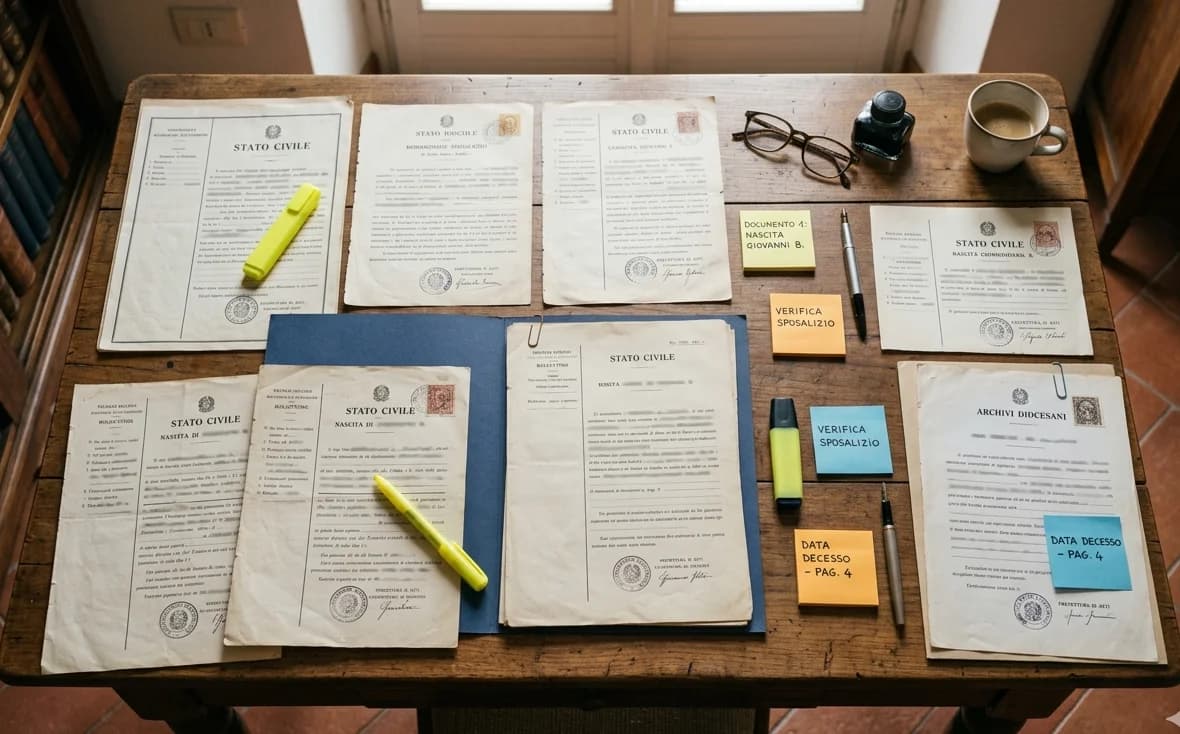
When to register with AIRE
In general you must apply when you establish habitual residence abroad for more than twelve months. Temporary moves for study, assignment, or medical care may fall under different cases: check the updated circular and, if in doubt, ask your competent consulate before you move.
- Permanent move abroad for work or retirement
- Marriage or stable cohabitation with residence abroad
- Birth of children abroad to be recorded in the Italian line
- Citizenship by descent paths with emigrated ancestors and descendants living outside Italy
Who must not (or cannot) register
Among others, those temporarily abroad for less than twelve months for specific purposes, some public employees on mission, and those maintaining only a fictitious foreign residence to evade obligations—a sanctionable situation. Good-faith documentation is always the shortest road.
Italian municipality and consulate: who does what
The municipality of last residence in Italy (or of original registration, depending on the case) manages AIRE registration on the citizen’s or consulate’s report. The consulate in your district abroad receives the residence declaration, transmits data, and provides services: passports, certificates, powers of attorney, some civil status procedures.
Typical steps for a new registration
- Complete the declaration of residence abroad form (ministerial format)
- Submit it to your consulate with ID and proof of foreign address
- Wait for transmission to the competent Italian municipality
- Verify registration (certificate request or online check where available)
Transcribing acts in the Italian municipality
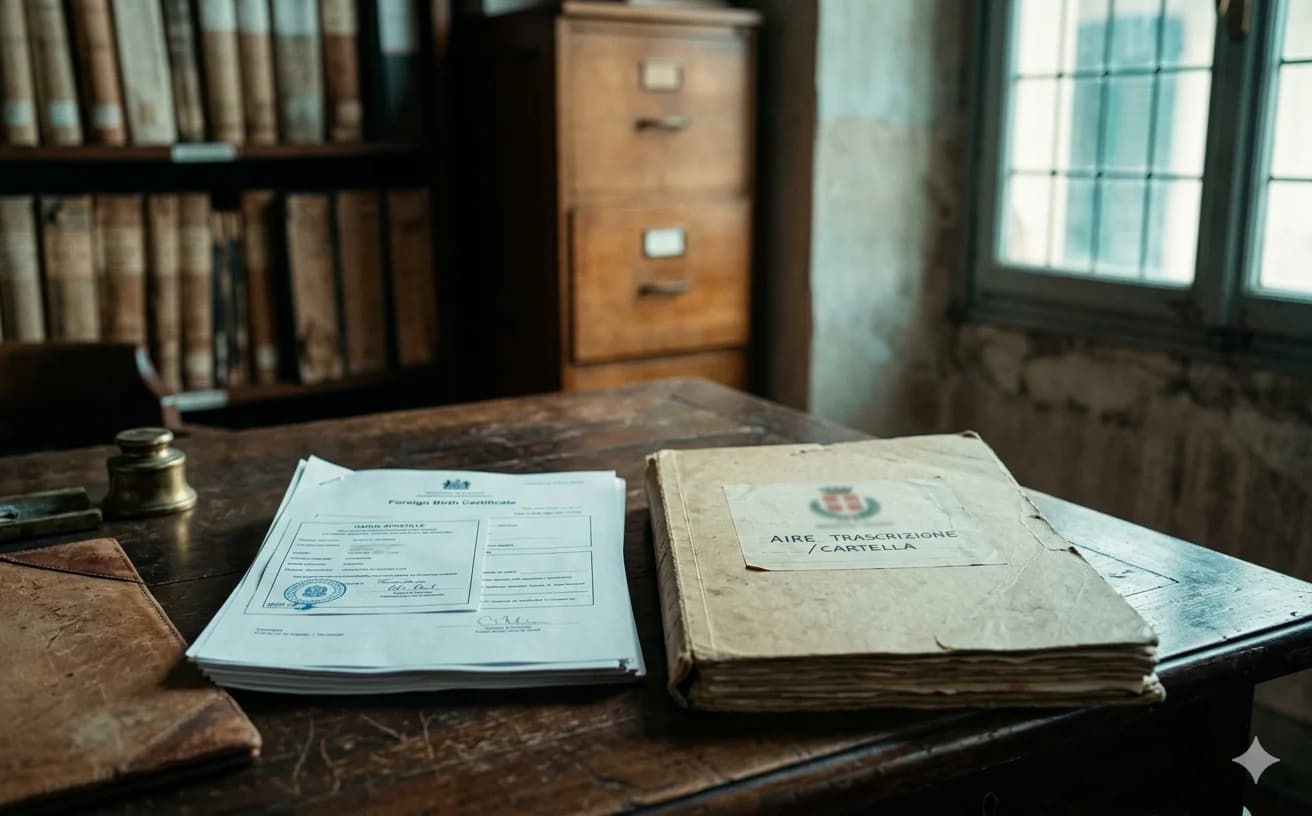
Births, marriages, and deaths abroad do not automatically exist in Italian registers: they must be transcribed in the competent municipality (usually that of the person’s or ancestor’s residence, under precise rules). Transcription requires the foreign act legalised or apostilled, sworn translation if not in Italian, and often consular input.
Without transcription, a citizenship application can stall: the office does not see the full genealogical chain in Italian. Plan transcriptions in parallel with collecting extracts, not at the end—municipal timelines can exceed consular ones.
Documents often needed for transcription
- Full-format foreign birth or marriage certificate
- Apostille or legalisation from the issuing country
- Sworn translation into Italian, if required
- ID and, if needed, proof of link to Italy (ancestor’s residence, etc.)
AIRE says where you live today; transcription says who you are in the eyes of Italian civil status.
Consular services linked to AIRE
Regular AIRE registration facilitates passports, consular certificates, overseas electoral registration (AIRE voters), some tax procedures, and assistance in emergencies. For children born abroad, timely declaration avoids later problems with passport and citizenship.
- Passport issue and renewal
- Single status, residence, citizenship certificates for foreign use
- Registration of contracts and powers of attorney effective in Italy
- Coordination with recognition or international adoption (specialist cases)
AIRE and citizenship: why they matter together
In iure sanguinis paths you often must show that the emigrated ancestor did not lose Italian citizenship and that transmission is uninterrupted. Ancestors’ or relatives’ AIRE registration, together with transcriptions, builds the dossier municipalities and consulates examine. Skipping a piece—for example an untranscribed foreign marriage—can invalidate years of documentary work.
If you live abroad and are starting the procedure, align three threads: collecting acts in the country of birth, translations and apostilles, AIRE registration and transcriptions in Italy. ItaloDocs supports the documentary part; for legal strategy on naturalisations or critical dates, consult a qualified professional.
Mistakes to avoid with AIRE
- Remaining registered in Italy and abroad without regularising (double residence)
- Not updating the consulate after a move
- Sending the municipality acts without apostille or with generic translation
- Confusing consular certificate and municipal transcription
- Opening citizenship without verifying the competent municipality for each act
Timelines, costs, and expectations
AIRE registration timelines depend on municipal workload and file completeness. Transcriptions can take months. Fees and revenue stamps vary: budget for translations, apostilles, and certified post. Organised patience—with deadlines on the calendar—beats forum anxiety.
Quick checklist before the consulate
- Valid Italian passport
- Proof of address abroad (lease, utility bill, declaration)
- Italian codice fiscale
- Any certificates already apostilled for transcription
- Forms completed in every field, without ambiguous abbreviations
- Copies and originals as indicated for the appointment
Conclusion
AIRE is not a formality for “forgotten emigrants”: it is the thread linking real residence, consular rights, and consistent Italian civil status. Whether you live in Buenos Aires, Sydney, or Berlin, registering properly and caring for transcriptions puts you in a better position for citizenship, family matters, and emergencies with less friction.
For the documentary dossier linked to citizenship, we can handle extracts, legalisations, and sworn translations—and let you spend saved time on the next step with your consulate and competent municipality.
A well-informed consulate receives complete files; complete files start with aligned AIRE and records.