The coffee ritual in Italy: bar culture and espresso
Espresso history, bar habits, cappuccino vs espresso, and why coffee is a social meeting point in Italy.
February 28, 2026 · 6 min
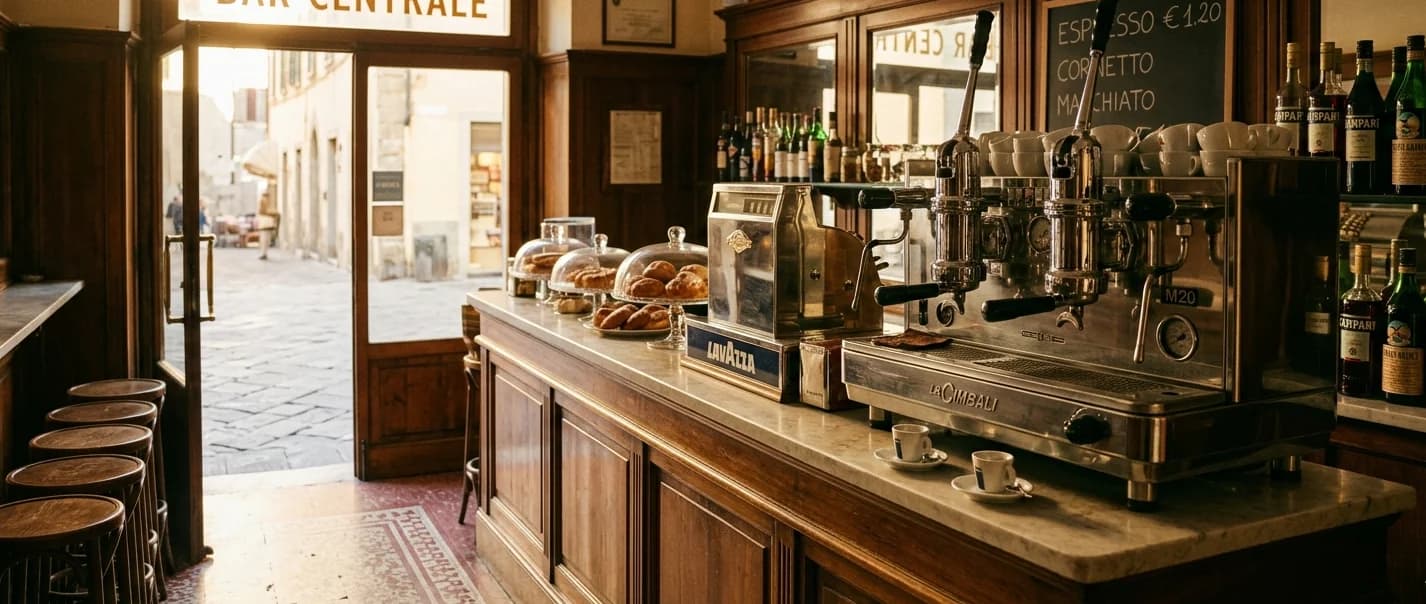
In Italy the bar is not “a coffee shop”. It is the first office of the day, the neighbourhood news agency, the place where you ask a favour, comment on the match, greet a neighbour you have not seen in a month. And at the centre is often a small cup, steaming, drunk in seconds at the counter.
Understanding coffee means understanding part of Italy: rhythms, prices, unwritten rules, differences between North and South, city and village. This micro-guide is for newcomers—and for anyone who wants to explain to foreign friends why cappuccino after lunch “is not done” (or almost not).
A short history of espresso in Italy
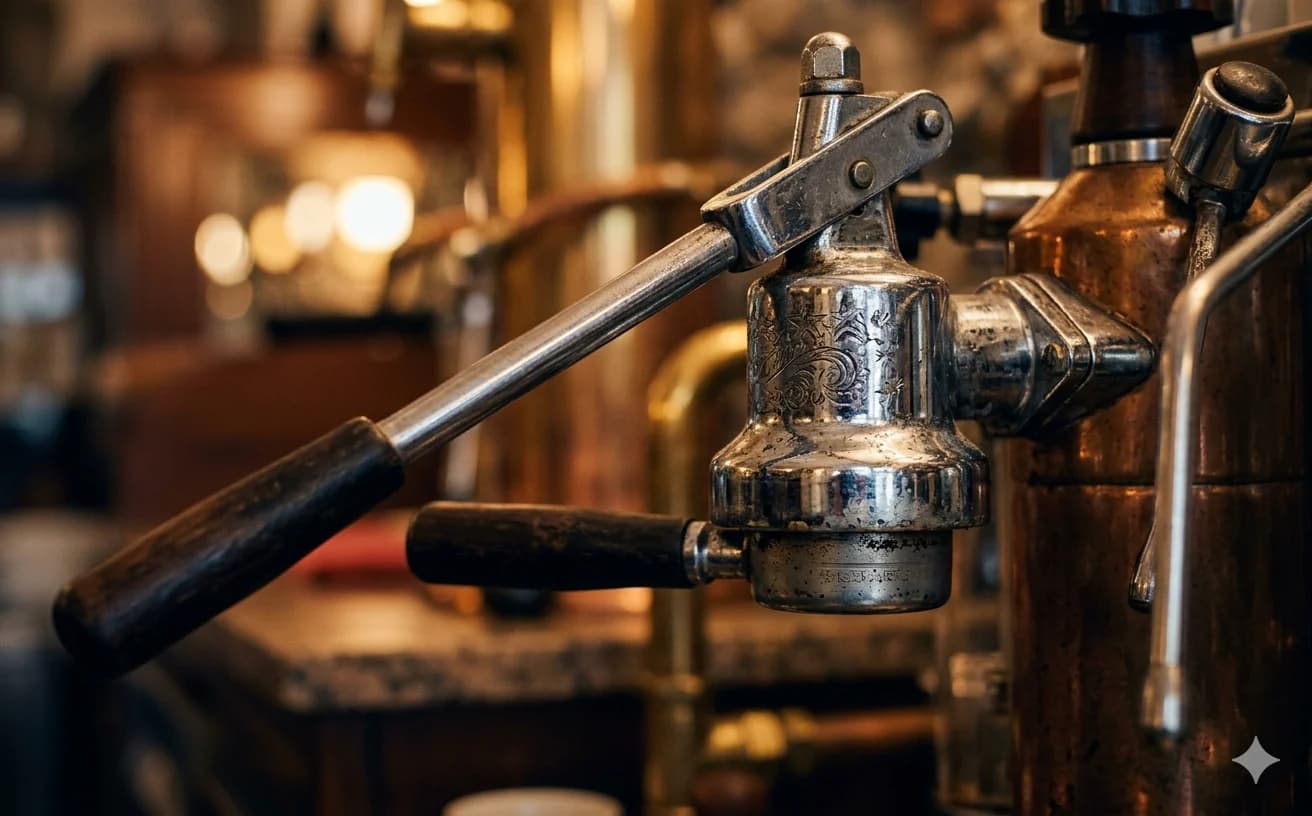
Coffee reached Europe between the seventeenth and eighteenth centuries, initially as a luxury drink. Italy soon became a symbolic homeland: Turin, Venice, Naples compete in the myth of the first cafés. But it was in the twentieth century that espresso as we know it was born: pressure, fast extraction, golden crema, hot cup.
Ever more sophisticated machines turned the bar into a daily laboratory. The Moka at home is another chapter—slower, familiar, Sunday-like—but the bar remains the social place par excellence.
The bar as a social institution
The Italian bar opens early, closes late (with local pauses and rules), sells pastries, newspapers, often lottery tickets and minimal services. It is democratic: workers, clerks, students, pensioners go there. The price of coffee at the counter is still, in many cities, an economic and social thermometer.
In Italy “un caffè” almost always means espresso, short, hot, immediate—not a large takeaway Americano.
Counter vs table
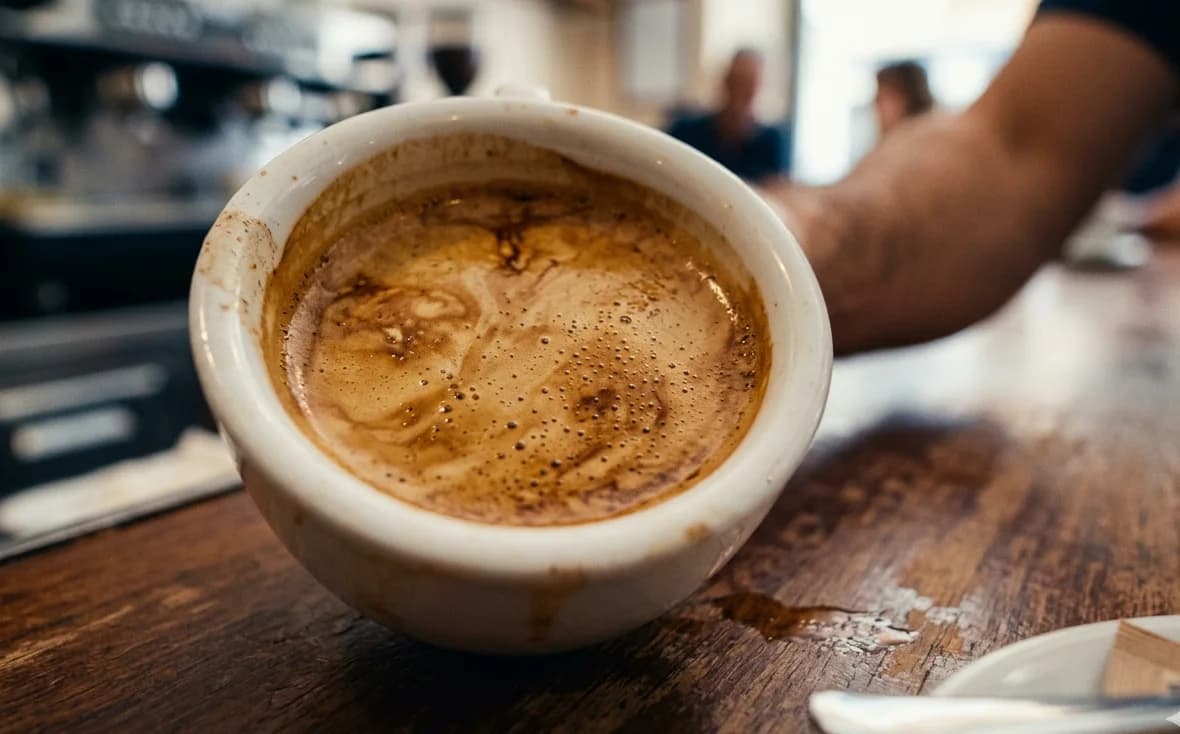
At the counter you pay less and drink standing, trading comfort for speed and conviviality. At the table you pay for service (implicit or explicit cover) and stay longer. The choice is not snobbery: it is function. Before work the counter rules; on Sunday with the paper, the table.
Differences from other countries
In the United States and parts of northern Europe coffee is often large, travel-sized, customisable with syrups and abundant milk. In Australia flat white and specialty coffee dominate. In France filtered or lengthened coffee plays a different role.
In Italy customisation exists (macchiato, lungo, with a drop of milk), but within a shared vocabulary. Asking for “latte” without specifying may bring a glass of plain milk—not a caffè latte. Asking for “American coffee” in many good bars gets an espresso lengthened with hot water, not drip coffee.
- Italy: short, at the bar, social, inexpensive at the counter
- USA/UK: large, takeaway, extreme customisation
- France/Germany: lengthened coffee, pastry, longer sitting
- Ethiopia/Colombia (origins): different rituals, often ceremonial
Cappuccino vs espresso: rules and myths
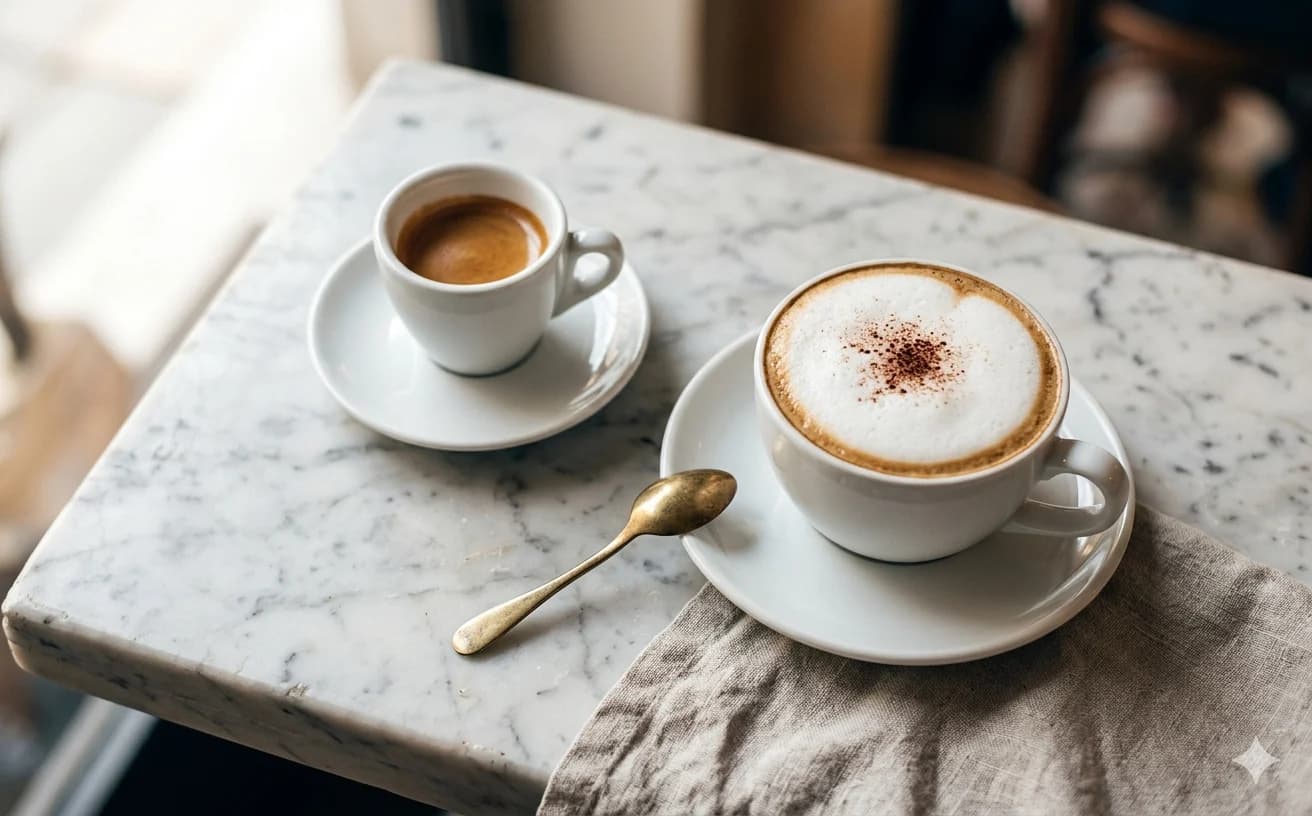
Espresso is the base: 25–30 ml of intense extraction. Cappuccino combines espresso and steamed milk, usually at breakfast—with a cornetto or brioche. After lunch or dinner many Italians prefer bitter coffee: cappuccino feels “heavy” to some palates and local tradition discourages it.
Variants you will hear at the counter
- Caffè macchiato: espresso with a little milk
- Caffè corretto: with a drop of grappa or other spirit
- Caffè lungo / ristretto: more water or more concentrated
- Caffè shakerato: cold, summer, energising
- Decaffeinato: exists and is not mocked
Italians’ daily habits
Coffee marks the day: one on waking (or after the pastry), one mid-morning, one after lunch, sometimes one in the afternoon for those still working, rarely in the evening (except after dinner, short). It is not always pure caffeine: it is pause, excuse to meet, way to close a conversation (“let’s go, a coffee and then…”).
Coffee offered
Offering coffee is a social gesture: thanks, agreement, peace. “I’ll get this one” closes light arguments and opens talk. Refusing without reason can seem distant; accepting graciously is an art.
Cornetto, brioche, gelato
The bar is not only coffee: for many breakfast is sweet; gelato on summer evenings is another ritual. Bar and pastry shop overlap: learning local differences is pleasure, not homework.
Coffee as social ritual
Deals are made informally at the bar, directions are asked, weather is discussed with strangers who almost become familiar. For those living in Italy, the barista may be the first to notice you are unwell or to congratulate you on good news overheard by chance.
Integrating in Italy also passes through there: learning to say “un caffè, per favore” looking people in the eye, not only at the menu.
If you are preparing a move, the bar is applied anthropology—as we explain in the guide to living in Italy. If you are travelling, pair it with tips for travelling off the beaten path.
Specialty coffee and tradition
In recent years specialty coffee and artisan roasters have won cities like Milan, Turin, Rome, and Bologna. They coexist with the neighbourhood bar: they do not replace it. You can love both—the one for bean origin, the other for the speed of “hi, the usual.”
Moka and home
At home the Moka remains queen: familiar noise, smell filling the kitchen, slow Sunday. It is not “worse” than bar espresso: another chapter of the same Italian story.
Visitors’ gentle mistakes
- Ordering “latte” expecting a caffè latte
- Sitting at a table without knowing the price changes
- Asking for an oversized cappuccino like in the USA
- Eating a cornetto while walking (tolerated in some cities, less in others)
- Forgetting “buongiorno” on entry—a small gesture, big effect
Decaf and alternatives
Decaf is ordinary and respected; barley and ginseng also have a morning place. Nobody should feel guilty for skipping caffeine: the social ritual matters as much as the substance.
Italian coffee is not fully explained: it is lived, standing at the counter, spoon clinking on the cup, the day resuming. Next time you pass a bar, go in. Order an espresso. Watch. You may understand Italy a little better—thirty millilitres at a time.