
Moving to Italy: a complete guide to planning your relocation
Planning, documents, residence, citizenship, language and culture — with a section on frequent mistakes woven into the journey.
April 12, 2026 · 7 min
Moving to Italy is not only a geographical choice: it is a life project touching documents, rights, language, and daily habits. Those who arrive with enthusiasm but no administrative map risk losing months between counters, wrong translations, and misaligned expectations. This guide gathers what you need to plan clearly—from the first idea to the first year on the ground—integrating the mistakes we see most often, without reducing everything to a “what not to do” list.
Why plan before you leave
Italy offers quality of life, culture, and real opportunities, but its bureaucracy rewards those who prepare steps in sequence. Residence, residence permit, codice fiscale, and health card are not synonyms: confusing them is one of the costliest slips in terms of time. Before buying a one-way ticket, clarify which status you need, which municipality you intend to settle in, and which documents must already be in Italian or translated.
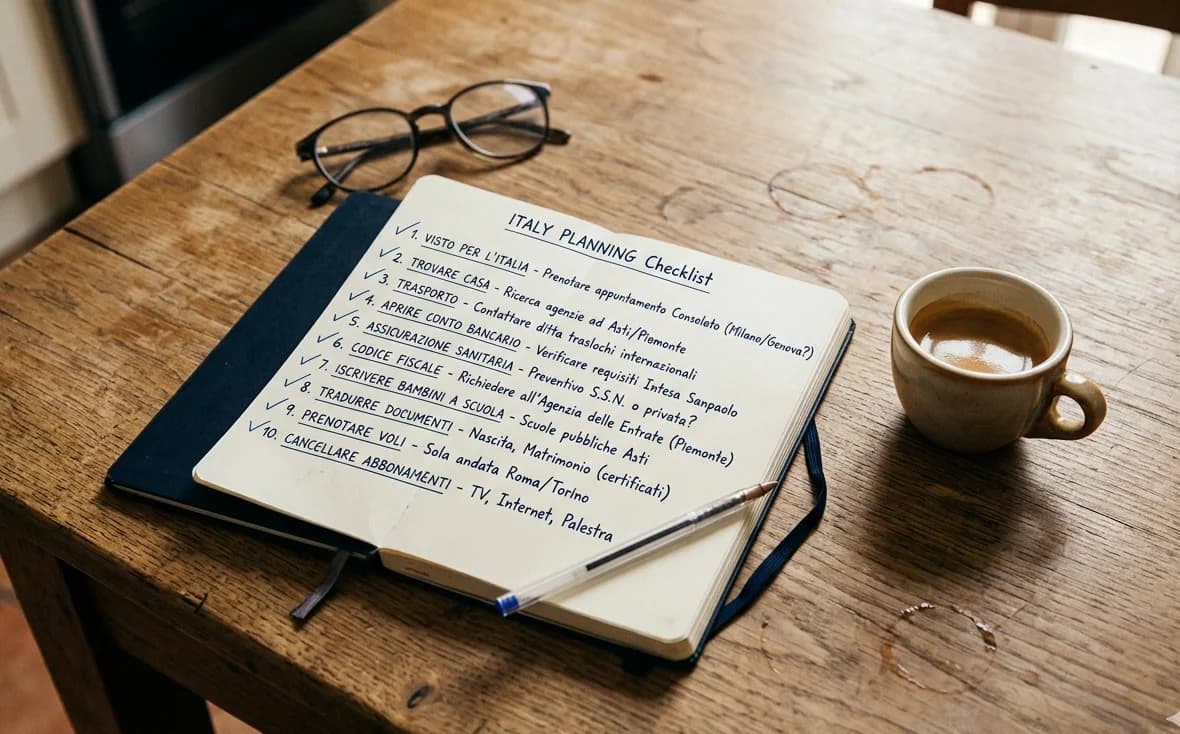
A solid relocation plan includes at least three time horizons: within 90 days (visa, temporary housing, codice fiscale), within the first year (anagrafe residence, work or study contract, bank account), and beyond the first year (possible citizenship, family reunification, putting down roots). For everyday orientation, our practical guide to living in Italy fits well alongside this path.
Choosing where to live: not a minor detail
Region, city, and neighbourhood affect work, rent, public services, and office timelines. The North tends to offer more industrial jobs and digitised services; the Centre and South attract people for cost of living and lifestyle, with wide variation from town to town. Visiting several areas and talking to residents beats dozens of online comparisons.
Useful criteria for the choice
- Labour market or remote work with clear tax treatment
- Proximity to schools, hospitals, and connections (trains, airports)
- Rent cost and average time to find housing
- International communities or services in another language, if you need them at first
Documents, visas, and residence permits
The documentary path depends on citizenship and reason for the move: employment, self-employment, study, family reunification, investment, retirement, or other. Requirements change with Interior Ministry circulars and bilateral agreements: always check the updated official source, then consult a professional for complex cases.
For many non-EU citizens the flow goes through an entry visa in the country of origin, then a residence permit at the competent Questura. Foreign documents often need translation into Italian in a form acceptable to the receiving authority—a generic translation may be refused. See our article on sworn translation.
Documents worth having ready
- Valid passport and certified copies if required
- Birth, marriage, or single-status certificates, with apostille where needed
- Qualifications or employment contracts, if relevant
- Codice fiscale (often obtainable before residence, in many cases)
- Health insurance or National Health Service enrolment, depending on the case

Anagrafe residence, tax, and healthcare
Anagrafe residence in the municipality activates many rights and duties: population register enrolment, choice of GP, access to local services. You obtain it with a registered lease, hospitality declaration, or title of ownership, plus ID and codice fiscale. Timelines vary: in large cities appointments can take weeks.
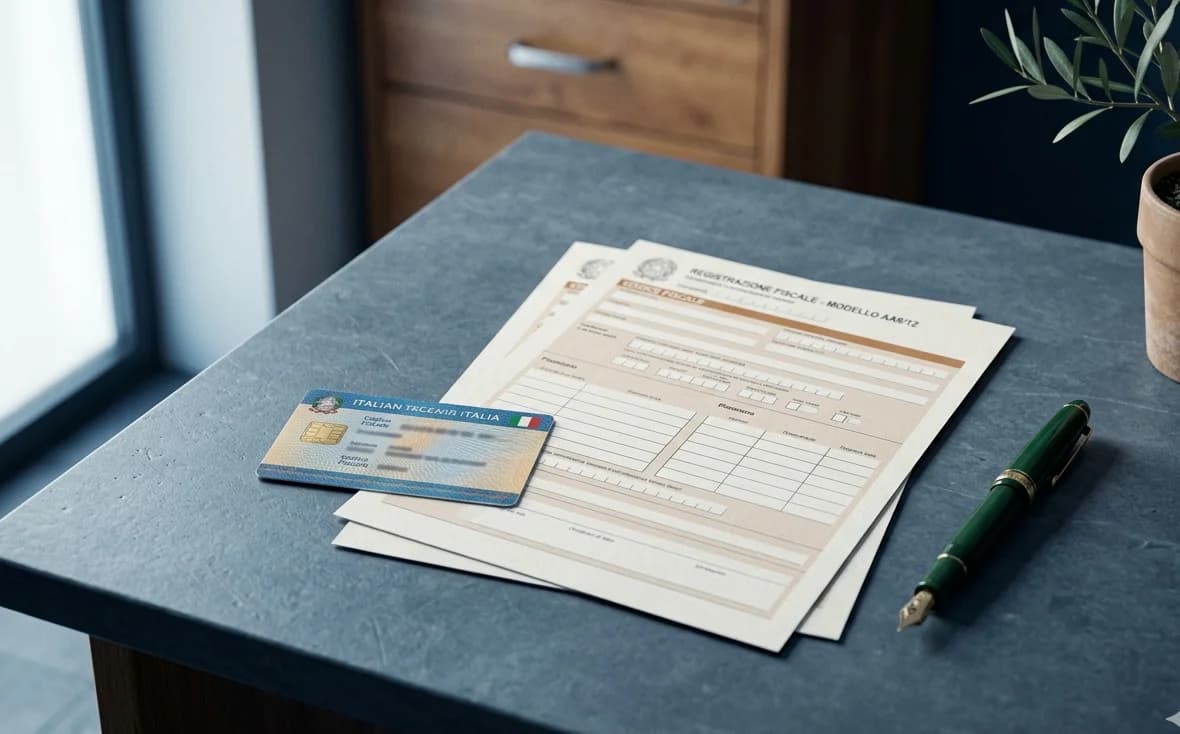
The codice fiscale is the key to contracts, payslips, utilities, and tax returns. The health card follows NHS enrolment or temporary coverage for some categories. Without these steps, even regular work can become complicated.
Distinctions to keep in mind
- Residence permit: title to stay legally (non-EU citizens)
- Anagrafe residence: enrolment in the municipal population register
- Tax residence: where you pay taxes, with its own rules
- Italian citizenship: distinct legal status with specific requirements and timelines
In Italy hurry rarely speeds up procedures—preparation does.
— Field experience
Citizenship and ties to Italy
Those who move out of love for the country but have Italian roots often face a double path: settling here while rebuilding the documentary line for citizenship. Civil status extracts, transcriptions at the competent municipality, and—for those staying abroad—coordination with AIRE and the consulate are required. Do not start at the consulate without mapping missing acts in Italy: you risk duplicate submissions and lost months.
Even without citizenship, keeping Italian or foreign registry certificates in order eases marriages, children’s births, and inheritances. For remote requests, the ANPR portal and documentary support services can make the difference—see registry certificates and ANPR.
Italian language: a concrete investment
Living in Italy without Italian is possible in some urban bubbles or international jobs, but it limits doctors, schools, neighbours, and offices. A2–B1 level improves quality of life in the first year. Municipal courses, universities for foreigners, and language exchanges are often cheaper than people expect.
- Learn bureaucratic vocabulary: residenza, anagrafe, bollo, PEC
- Listen to Italian radio and podcasts to train your ear
- Do not fear asking someone to repeat—it is normal, not weakness
Integration beyond grammar
Integration also passes through rhythms (lunch break, shop hours), unwritten rules (queue at the bar, tone in emails to offices), and curiosity about local festivals. Joining a market, a course, or a neighbourhood association speeds belonging more than any checklist.
Cultural adaptation and realistic expectations
Italy is neither a film set nor a northern European office: it is both, depending on the day and the municipality. Accepting administrative slowness and warmth in relationships in the same package helps you not treat every delay as personal failure.
Build a mixed network: compatriots for emotional comparison, Italians for context, and colleagues or neighbours for daily life. Avoid social groups that only spread myths or fear: seek verified sources and professionals when the procedure is serious.
Frequent mistakes to avoid (without demonising enthusiasm)
Mistakes do not come from “stupidity” but from fragmented information. Here are the most recurring ones, woven into the path above—not as the article’s only content, but as signals to check.
- Opening procedures without verifying all required Italian or foreign documents
- Confusing anagrafe residence, residence permit, and citizenship
- Using translations not suitable for the receiving body (university ≠ municipality ≠ court)
- Underestimating municipality, Questura, or consulate timelines
- Neglecting AIRE registration if you are an Italian citizen living abroad
- Ignoring differences between regions, offices, and local interpretations
- Relying on forums or videos not updated on current law
- Signing a lease without understanding registration and constraints for residence
When to seek professional support
Cases with multiple civil statuses, foreign divorces, minors, dual citizenship, or acts in less common languages deserve specialised advice. Online documentary support—extracts, apostilles, translations—does not replace a lawyer where needed, but avoids basic errors on formats and timing.
First 90 days on the ground: a mini-timeline
- Days 1–15: housing, codice fiscale, contact with employer or hosting institution
- Days 15–45: Questura appointment if needed, insurance or NHS, bank account
- Days 45–90: anagrafe residence, GP, school enrolments if relevant
Conclusion: moving with method
Moving to Italy can be one of the richest choices in life, provided you treat it as a project and not a summer improvisation. Documents in order, calibrated expectations, growing language, and a social network: those are the four legs of the table. Mistakes shrink when every step has a precise name and a date on the calendar.
ItaloDocs supports those who need to translate, certify, or obtain Italian documents from abroad, with a clear online process and dedicated assistance—so you can focus on home, work, and integration, not endless queues.
Italy is won one step at a time: the first is understanding which step is yours today—not someone else’s on a forum.